Earning online through affiliate marketing is pretty common. You promote stuff and make commissions when people buy using your links. It can start as just extra money or grow into something more depending on how far you take it.
Beginners struggle a lot with the beginning part.
This guide could give some steps that feel more realistic. Seeing the first commission come through is the goal for most starting out. The basic concept gets overlooked sometimes I think.
What Is Affiliate Marketing (and Why Start)?
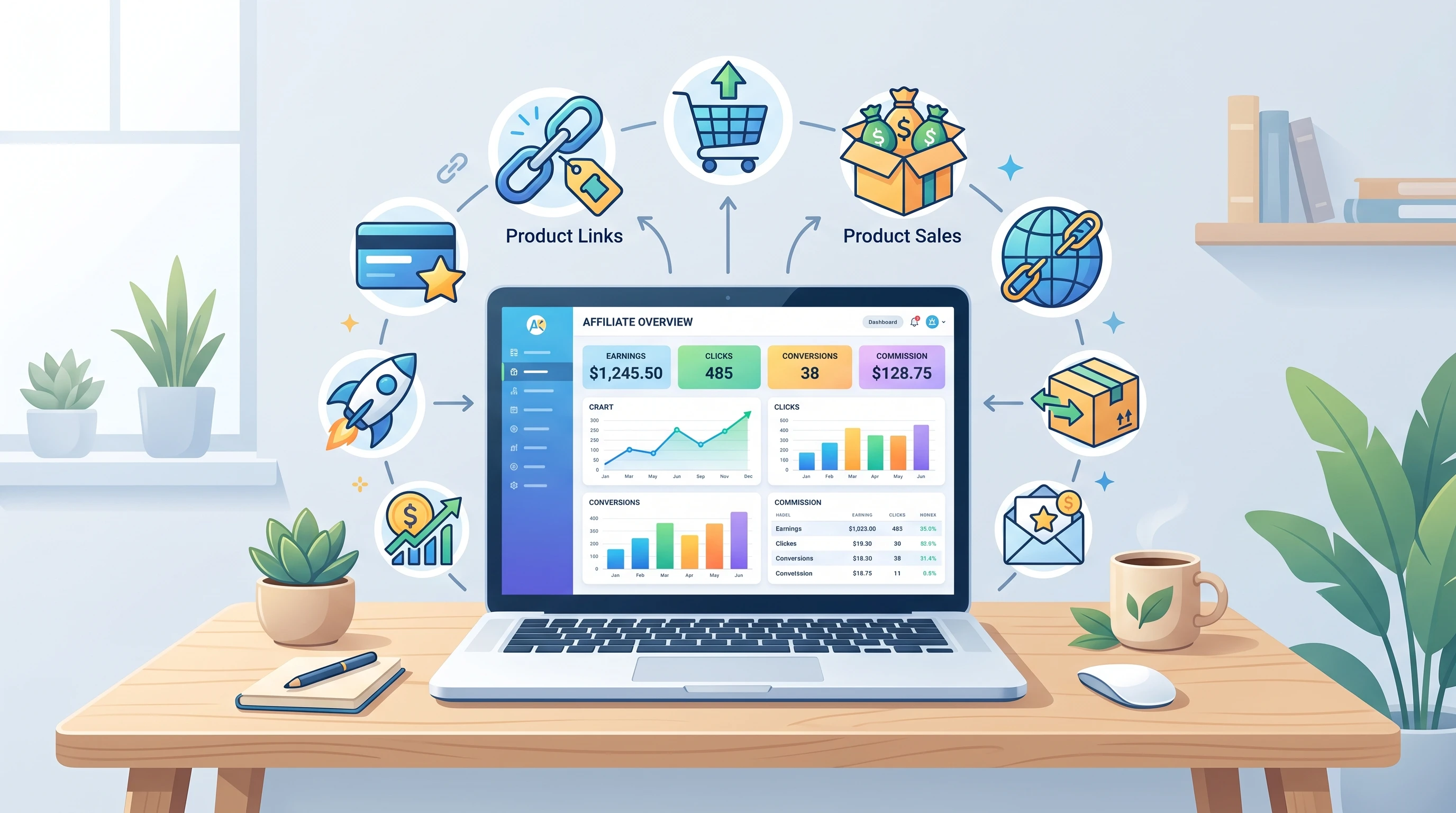
Affiliate marketing is a way of earning by recommending products or services to others. Most companies with online sales have some type of affiliate program. When you sign up, you get a unique link to share. If someone clicks your link and buys, you earn a cut of the sale. The payout can be a small percentage for physical goods or a bigger chunk for online services and software.
Getting started with affiliate marketing takes some learning and patience, but it’s totally possible. There are people who started from scratch and got their first payout by following a simple plan, so it’s worth giving it a go if you’re interested in online earning without needing to create your own products.
If you’re completely new to this business model, start by reading my What Is Affiliate Marketing? A Beginner’s Guide before learning how to create content that converts.
Step 1: Pick a Niche You Actually Care About
Picking your niche comes first, and honestly, it’s super important. The niche is just the topic, theme, or industry you’ll focus your promotions on; anything from tech gadgets to fitness tips to gardening tools.
If you choose a niche you find interesting (or at least don’t hate), making content and sharing ideas feels way easier. Plus, when you talk about something you understand or are willing to learn about, your recommendations sound more real, and people are more likely to trust you.
- Start with your hobbies or problems you’ve solved. Write a quick list of things you spend time on, products you’ve recently bought, or services you wish existed.
- Check if there are affiliate programs for your ideas. Google your niche plus “affiliate program” to see available options.
- Look for evergreen topics. Niches that have steady interest, like health and tech, can be less risky for beginners than quick fads.

Step 2: Find the Right Affiliate Offers
Once you know your area, it’s time to track down products or services people in that niche actually want to buy. There are a few ways to go about this:
- Search for affiliate programs from companies directly (Amazon Associates, Walmart, Target, etc.).
- Check large affiliate networks, like ShareASale, CJ Affiliate, or ClickBank.
- Look for brands you already use and trust, even tiny companies sometimes have affiliate options.
When you’re starting out, focus on products with genuine value, fair prices, and good reviews. Promoting stuff you wouldn’t personally use or recommend usually backfires down the road.
Step 3: Create Useful, Trustworthy Content
To get that first sale, you’ll need to build some type of content that helps others. Useful content gives people a reason to click your links and trust your recommendations. This can be a blog, YouTube channel, email list, or even a helpful social media account.
For most beginners, a simple website or blog is the easiest route. You don’t even need to be a writing whiz; just focus on helping someone solve a problem, answer a question, or pick between products. If you have a knack for making videos or infographics, that can also set you apart. Even a podcast or email newsletter can work for sharing affiliate recommendations with a unique twist.
- Write reviews: Honest, balanced reviews of products in your niche.
- Create how-to guides: Step-by-step tutorials and explanatory posts.
- Do comparison articles: Show pros, cons, and key differences between popular products.
- Answer common questions: If people are searching “Is [product] worth it?”, write a post answering it!
Your content should always include your affiliate disclosure. It’s both legally required in most places and helps build trust: “As an affiliate, I may earn a commission if you buy through links on this page.” Remember, trustworthiness is what separates successful affiliates from forgettable ones.

Step 4: Get Targeted Traffic to Your Content
Writing awesome posts does nothing if nobody sees them. The next step is getting people, the right people to your content, so your efforts pay off.
- Use SEO: This means optimizing your posts for keywords people are searching for. Cover beginner questions as well as “buyer intent” phrases like “best budget headphones 2024.”
- Share your posts on social networks: Not all social posts work, but sharing helpful guides or reviews in a Facebook group, Pinterest board, or Subreddit can bring in curious visitors.
- Try YouTube: Videos reviewing products or explaining how to use them can send traffic to your linked site or directly to affiliate offers (check each affiliate program’s rules).
- Join online communities around your niche: Jump into discussions, answer questions, and share links only when it’s relevant, never spam.
The more targeted your traffic, the better your chance of getting a sale. Visitors already looking to buy are much more likely to click your affiliate link and complete the purchase. You can also experiment with participating in question-and-answer communities like Quora, or guest post on niche blogs to get your name (and links) out there.
Step 5: Focus on Buyer-Intent Keywords and Calls-to-Action
Not all website visitors are equal. If your content matches what someone’s already searching for (especially when they’re browsing “best,” “cheap,” “top rated,” or “reviews”), you’re getting closer to a sale. Also, pay attention to seasonality, such as “holiday gift guides,” which can give your traffic a big spike at certain times of the year.
Use keywords that show someone’s about ready to buy, like “best cheap laptops for students” or “where to buy protein powder online.” Free keyword tools like Ubersuggest, AnswerThePublic, or even Google Autocomplete can help you spot phrases to target.
Add clear calls-to-action in your content, such as “Check latest price on Amazon” or “See more details here.” Keep it honest and helpful; no high-pressure or pushy stuff. Try putting your affiliate links in several places throughout your post to increase visibility, sometimes readers will miss a single link but spot another later.
Once you’ve found the right keywords, choosing the best affiliate programs for beginners becomes much easier.

Step 6: Be Patient and Track What Works
Getting your first affiliate sale doesn’t usually happen right away. On average, it can take a few weeks (or even a couple months) as your site builds authority and content gets found. If you’re tracking clicks and views through your affiliate dashboard, you’ll start to notice which posts or videos get attention.
Stick with what’s working. If reviews are getting traffic but nobody’s clicking your links, maybe your calls-to-action need tweaking. If you’re seeing lots of clicks with few sales, try adjusting which products you recommend or making your guides even more helpful. Use your data to refine your approach; small changes can have a big impact over time.
Common Mistakes Beginners Make (and How to Avoid Them)
- Trying to promote too many products at once: Sticking to a smaller, focused range of offers makes it easier to build trust and authority.
- Ignoring the legal stuff: Always include affiliate disclosures where they’re needed.
- Neglecting SEO: Without keyword optimization, your killer content might not get found.
- Quitting too early: Earning that first sale takes some patience; give your work time to grow.
- Only chasing high commissions: Focus on helping readers and recommending genuinely good stuff rather than just the highest-paying programs.
- Missing out on building an email list: Even a small list of interested readers can make a huge difference later as you can inform them about new content, tips, or deals directly in their inbox.
If you’re looking for step-by-step training, check out my guide on creating a personal brand online as well.
Recommended Tool: Wealthy Affiliate for Beginners
If you’re looking for a single place to learn everything about affiliate marketing, build your first website, and start getting traffic, Wealthy Affiliate is worth checking out. They provide beginner friendly training, tools for researching keywords, and a website builder so you can get online fast, even if you’ve never touched a website before.
I started with Wealthy Affiliate myself and found the lessons step by step, the community always willing to help, and the platform includes everything you need under one roof. You can easily track your progress, practice making content, and get support from others at the same stage as you. Even if you don’t stay forever, it’s got a free trial that’s great for testing the waters.
The Wealthy Affiliate platform keeps things simple for new users and offers a space to talk with others, plus regular live classes and updated strategies. That means you’re not going it alone, and you’re able to ask for advice or feedback whenever you feel stuck.
Affiliate Disclosure: As a member of Wealthy Affiliate, I may earn a commission if you decide to join through my link. This helps me keep creating free guides and sharing honest advice you can trust.
Ready to check it out? Click here to learn more about Wealthy Affiliate and see if it’s a fit for you.
Frequently Asked Questions for Affiliate Marketing Beginners
How much can beginners expect to earn with affiliate marketing?
Income varies a lot. Some get their first sale within a month, others take longer. It depends on your niche, content quality, and effort. Focus on learning and improving; income scales up as you build traffic and trust.
Is a website required to earn affiliate commissions?
Not always, but it helps a lot for long term success. You can start on YouTube, Instagram, or by sharing links in online communities if allowed. For most affiliate programs, though, a website or blog is the most stable route for beginners.
Are all affiliate programs free to join?
Most are free, but always double-check. Legit programs won’t ask for money up front. If a site charges just to access affiliate links, approach with caution.
Start Taking Action. Your First Sale Awaits
Earning your first affiliate sale is a real milestone. It can feel slow getting started, but every piece of helpful content brings you closer. Pick a topic that makes sense for you, find legit offers, and stick with it. With steady effort and a bit of patience, you’ll have your own “first commission” moment before you know it. If you’re ready to speed things up, check out Wealthy Affiliate for a head start. Questions or need help getting started? Drop a comment or reach out, happy to help!
This was really helpful. I’m just getting started with affiliate marketing, and there is so much information out there that it can be difficult to know what I should actually focus on first. I especially liked your advice about not trying to promote too many products at once. I can see how easy it would be for a beginner to start adding affiliate links everywhere and lose sight of actually helping the reader.
The step-by-step approach you laid out here feels much more manageable and could be exactly what I’ve been looking for to get started in the right direction. If you were starting over today with a brand-new website, which of these steps would you spend the most time on before worrying about making that first sale?
– Scott
Thanks, Scott! I’m glad you found the step-by-step approach helpful. Starting simple and focusing on helping the reader first can make the process much easier.
I think my favorite tip here is to pick a topic to write about that you actually enjoy and are reasonably knowledgeable about. I find in the long run those websites are doing much better than the ones I chose because I thought the products would make more money. I think it shows in your writing if you are really interested in what you are talking about and the enthusiasm comes across a lot more.
The other think is to break your topic down into a sub niche, and in this way you can get more traction for your website as there will be less competition.
Thank you, Michel! I agree that choosing a topic I enjoy and narrowing it down to a specific niche can make a big difference. I appreciate the advice!