

A 9 to 5 pays the bills, covers the mortgage, and gives you a reason to get out of bed on a Tuesday. It also carries an assumption that most people never stop to examine: that trading forty hours a week for a fixed paycheck is the only sensible way to earn a living. That assumption made sense when the alternatives were scarce, expensive, or genuinely risky. It makes much less sense now.
Where the idea came from
The standard job, fixed hours, one employer, a paycheck every two weeks, is a fairly recent invention. It grew out of factories and offices where the work had to happen in one place, at set times, because the machines, the files, and the other people you needed were all in that one place. The arrangement wasn’t designed around what was best for the worker. It was designed around what the equipment and the organization required.
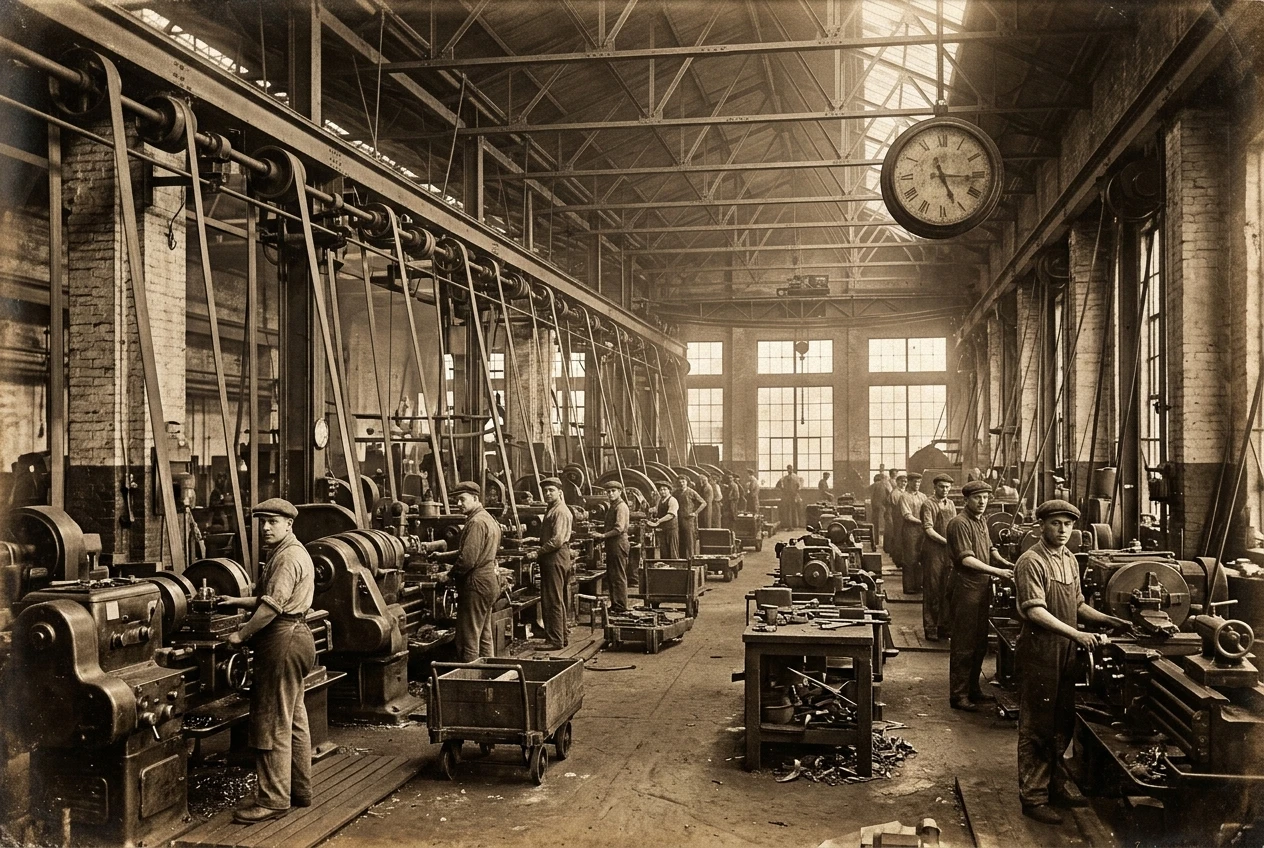
That constraint shaped how whole generations thought about earning money. You found an employer, you showed up, and your income was whatever your hours and your title added up to. Raises came slowly, if at all, and the ceiling on what you could earn was set by someone else’s budget, not by your own effort or skill. For most of the twentieth century, that was simply what work meant.
What a job actually trades
A job trades your time for a fixed amount of money, and the exchange rate rarely moves in your favor. Work an extra hour and, unless you’re paid overtime, you don’t earn an extra dollar. Get better at your role and you might get a raise next review cycle, if the budget allows it and if someone above you decides you deserve it.
None of that makes a job a bad arrangement. It makes it a limited one. Your income is capped by your hours and by decisions other people make about your pay. The only way to significantly change that equation, inside a traditional job, is to change jobs, climb a ladder that may or may not have room at the top, or take on a second job and trade away more of your time.
What changed
The internet removed the constraint that made the traditional job necessary in the first place. You no longer need to be in a specific building to do work that other people will pay for. You don’t need a warehouse to sell a product, a storefront to reach customers, or a sales team to recommend something useful to someone who’s looking for it.

Affiliate marketing is one of the plainest examples of this shift. You write about or talk about products and services you believe in, you link to them, and when someone buys through that link, you earn a commission. The company that made the product handles manufacturing, shipping, and support. You handle finding the right audience and giving them honest, useful information. The two biggest obstacles to starting a business twenty years ago, the cost of producing a product and the cost of reaching customers, have both been reduced close to the price of a laptop and an internet connection.
What building something on the side actually looks like
None of this means you quit your job on a Friday and replace the income by Monday. Building an online business, including an affiliate business, takes time to produce content, time for that content to be found, and time for an audience to grow large enough and trust you enough to act on what you recommend. That work usually happens in evenings, on weekends, or in whatever hours are left after the 9 to 5 and everything else in your life.

The advantage of this kind of business is that it doesn’t require you to risk your current income to start it. You keep the paycheck. You keep the health insurance, if that’s tied to the job. You build the second thing alongside the first, at whatever pace your schedule allows, and you only make a decision about the job once the second thing is actually producing something worth deciding about.
That’s a very different risk profile from the one most people imagine when they picture starting a business, which usually involves savings, a lease, and a leap of faith. An online business built around affiliate marketing can start with almost none of that.
Why affiliate marketing fits around a job
You don’t need to create a product, which removes the cost and the time of product development. You don’t need to hold inventory, which removes a warehouse, a storage fee, and the risk of stock sitting unsold. You don’t need to ship anything or handle returns, because the company you’re promoting already has systems in place to do that for its own customers.
What you do need is a focus, something you know about or are genuinely willing to learn about, and a reasonable amount of time spent writing, recording, or otherwise putting useful information in front of people who are already looking for it. That work can happen in an hour before the kids wake up or forty-five minutes on a train. It doesn’t require a desk at a company, and it doesn’t require anyone’s permission.
What Wealthy Affiliate actually gives you
Wealthy Affiliate is built around the idea that you shouldn’t have to figure all of this out alone, from scratch, by trial and error. Inside it, your work lives in a Hub, a space built around one focus at a time, whether that’s a niche you know well or one you’re building knowledge in as you go.

The Learn tab breaks that focus into Moves, which is to say Ask, Watch, and Read, so you’re never staring at a blank page wondering where to start. Live sessions, and the recordings of past ones, sit inside Learn as well, so you can watch other people work through the same questions you have. When you’re ready to actually produce something, the Studio puts your Writer and your Artist to work, drafting an article or creating an image based on what you need for that piece of content, charged in Credits only for what the work actually costs.
None of that replaces the time you put in. It replaces the guesswork, which is usually what stops people before they’ve really started.
Starting while you still have the job
You don’t need to decide, today, whether you’re the kind of person who leaves a 9 to 5 for good. You need to decide whether you’re willing to spend some of your evenings and weekends building something that belongs to you, on your own time, at your own pace, and see what it turns into.
[Add what made you start questioning the 9 to 5 arrangement for yourself] is a sentence worth finishing honestly, because the reason that brought you to this article is probably the reason worth building around. Maybe it’s the ceiling on your current income. Maybe it’s wanting a second source of money that doesn’t depend on one employer’s decisions. Maybe it’s simply wanting to own something.
Whatever it is, the arrangement that made the traditional job the only option is gone. What replaced it is slower than the promises you’ll see elsewhere online, and it asks for real, sustained effort rather than a shortcut. But it’s available to anyone with a laptop, some spare hours, and a willingness to learn.
If you want to see what building a Hub around your own focus actually looks like, from the first article to the first commission, Wealthy Affiliate is the place to start, and the first steps are free to take.