Finding time when everything is busy feels impossible sometimes. Work and family take most of it and errands keep adding up. It is easy to forget what you need too. But it does not have to be hours at the gym or anything.
If you have looked for ways to make money online affiliate marketing shows up a lot. The idea is promoting products for other companies and getting commission on sales from your link. Beginners often get stuck without a sales funnel set up though. I am sharing what I learned about building an easy funnel from the start. I think maybe just a bit of time each day can help with that. It seems like most people skip the setup part and then wonder why nothing moves.
How Affiliate Funnels Work (And Why They’re Really Important)
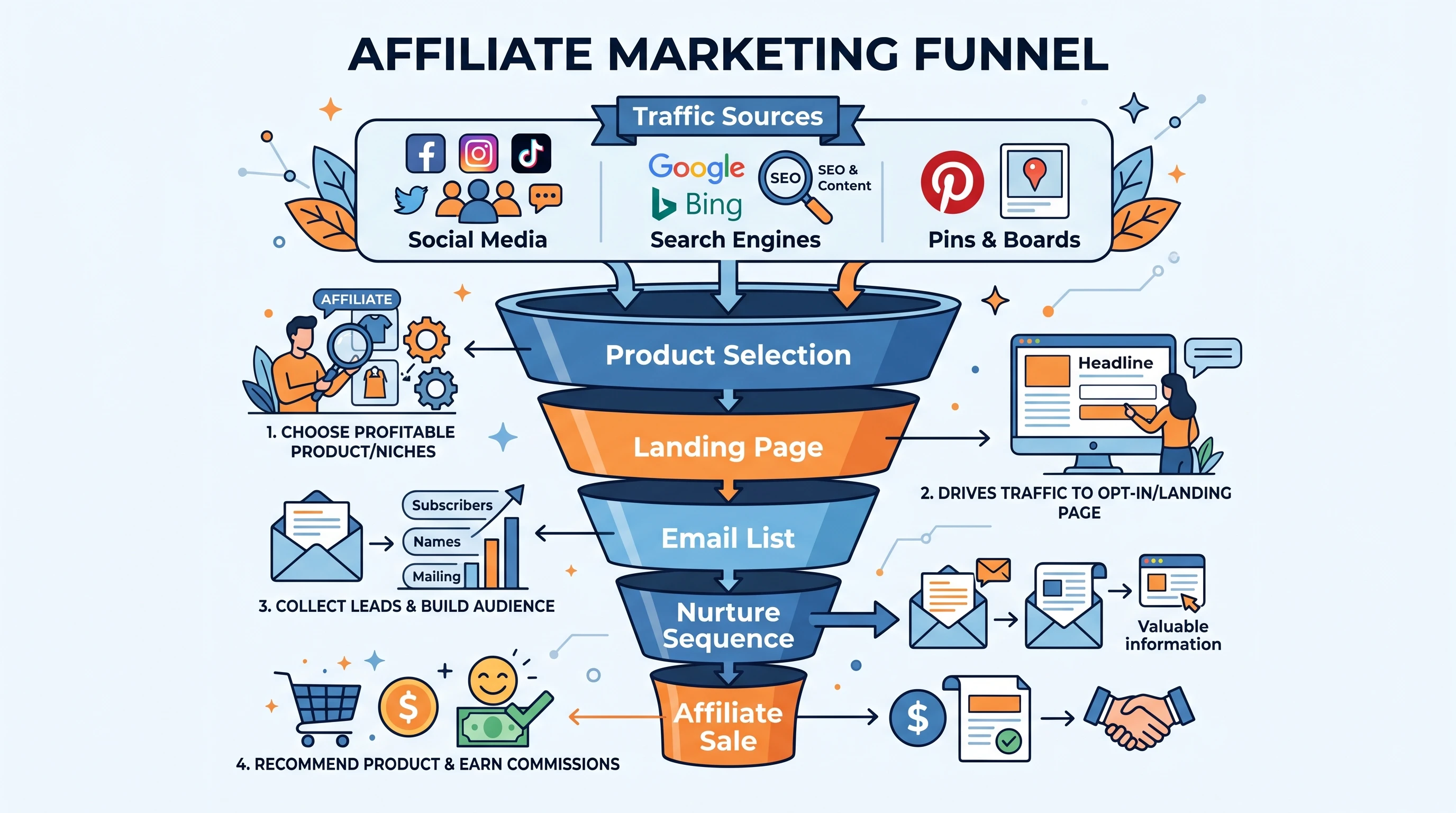
An affiliate marketing funnel is basically a path you lead people along from just browsing to making a purchase. It seems like the point is to share useful details first instead of tossing links around randomly. You end up collecting emails that way and can introduce offers later on when it fits.
This helps because it actually answers what someone might be wondering about. I think the trust part matters more than people realize at first. Sometimes the whole thing feels like extra steps though and maybe it does not always pay off right away.
You give value along the way and that makes the sale feel less forced. Not totally sure how many emails you really need before bringing up the products but it connects back to solving their issue.
A basic affiliate funnel usually has these main pieces:
- Landing page: A simple page that offers something useful (often free) in exchange for an email.
- Email sequence: Friendly emails with tips, answers, or value, plus your affiliate recommendations.
- Traffic sources: Ways to get people to your landing page, like Pinterest, SEO, and social media.
If you’re completely new to this business model, start by reading my What Is Affiliate Marketing? A Beginner’s Guide before learning how to create content that converts.
Picking the Right Affiliate Product as a Beginner
Before you can build a funnel, you need a product to promote. There are tons of affiliate programs out there, like Amazon, ClickBank, ShareASale, and individual company programs. I recommend starting with a product that fits one of your interests, solves a clear problem, or gets good reviews from real users.
Here’s how I narrow it down:
- Relevance: Does the product match the topic of your website or social platform? For example, if you love baking, a kitchen gadget makes sense.
- Commission rate: Some products pay a few percent, others offer 30%-50% per sale. Balance higher commissions with how likely it is people will buy.
- Popularity and reviews: Products with positive reviews and steady demand are easier to promote. If you haven’t tried it personally, check what buyers are saying.
- Cookie duration: Some affiliate programs give you credit for sales days or even weeks after a visitor clicks your link. Longer is usually better.
Jumping into a random program you found on a “top affiliate deals” list can backfire if your audience doesn’t care about it. When your promotion is genuine, you stand out from all the hype and your recommendations gain trust.
Choosing quality products is just as important as choosing the right affiliate program, so be sure to read my guide on How To Choose The Right Affiliate Program In 2026.
Creating a Super Simple Affiliate Landing Page
The landing page is where the funnel really starts. This is a single purpose page designed to get someone’s attention and encourage them to give you their best email address in exchange for something helpful (more on lead magnets shortly).
Here’s what I’ve found works best for beginners:
- Benefit-focused headline: Make it clear what your reader will get (“Free Cheat Sheet: Save Money on Groceries!”).
- Short, punchy description: One or two sentences explaining the value. Keep it casual and honest.
- Signup form: Just a spot for name and email. Don’t ask for phone numbers or extra info, so it stays quick.
- Simple design: Avoid clutter and distractions. Focus on how you’re helping your visitor.
There are free tools out there for creating landing pages, like Mailchimp, MailerLite, and Systeme.io. These provide beginner friendly options. Just pick a template and customize the wording to fit your freebie or offer.
Offering a Free Lead Magnet (What Works and How to Make One Fast)
A lead magnet is basically a little bonus you give away in exchange for someone’s email. It doesn’t need to be fancy or long, just useful. Some ideas include:
- Cheat sheet or checklist (like “5 Steps to Organize Your Desk”)
- Mini eBook or simple PDF (a quick guide or how-to)
- Short video tutorial or printable
If you’ve never made one before, start simple. Write a one-page PDF using Google Docs or Canva, save it as a PDF, and you’re done. When someone opts in on your landing page, your email system can automatically send the download link. This keeps the process smooth and professional.
Building Your Email List (And Why This Isn’t Just Extra Work)
People rarely buy something after their first visit to your page, so you need a way to stay in touch. That’s where collecting emails comes in. When someone gives you their email, you can send value and build a real relationship, rather than relying on a one-chance link click.
Email marketing platforms are beginner friendly these days. I’ve used MailerLite and ConvertKit, and both are fine for small lists and have free tiers. You’ll want to set up a simple “Welcome” automation to send the lead magnet, then a short follow-up series. I aim for about four to seven emails over the first two weeks, offering tips, resources, and some personal encouragement.
Writing Follow-Up Emails That Provide Real Value
Once someone has joined your email list, your job is to make their inbox a better place, not just push products at them every day. Here’s how I structure my first email sequence for affiliate funnels:
- Day 1: Welcome, thank you, and here’s your freebie. Invite them to hit reply with questions or struggles (this makes you way more approachable).
- Day 2: Share a helpful tip or interesting personal story related to your niche. No affiliate links yet, just focus on connecting.
- Day 3: Solve a common problem your readers have. Here’s where I add my first affiliate mention, but I always frame it as, “This is something I’ve used/found helpful, and you can check it out here. [Affiliate Link]”
- Days 4-7: Mix of answering more questions, offering encouragement, actionable tips, and highlighting how your affiliate solution fits in. I keep the tone conversational and never pushy.
The biggest mistake? Sending nothing but salesy emails that feel copy-pasted. People will unsubscribe quickly if you do that. Keep it real and genuinely aim to help, and more people stick around and actually check out your links.
Adding Affiliate Links Naturally Without Sounding Pushy
We’ve all seen those emails or blog posts that yell BUY THIS! every paragraph. That approach gets old fast. Instead, I sprinkle links in naturally, like I’d recommend something to a friend. Some phrases I find work are:
- “If you’d like to see the product I use, here’s where you can check it out.”
- “Some readers have asked about tools I recommend; this is my favorite.”
- “Full disclosure, I earn a commission if you decide to buy through my link. No extra cost for you!”
Always add your affiliate disclaimer and be upfront. This builds trust. Plus, a natural recommendation feels much more helpful than a sales pitch. Your audience will appreciate the honesty and be more likely to check out what you recommend.
How To Drive Traffic to Your Funnel (Even If You Don’t Have Followers)
You don’t need a big existing audience. Here’s what I’d focus on first:
Pinterest is really popular for beginners because people actually search for solutions and tips. Create a few simple pins that link to your landing page. Use keywords people are searching for (like “Meal Prep Printables” or “Productivity Cheat Sheets”). Tailwind and Canva make it easy to design and schedule pins, even if you’ve never used Pinterest before. Consistency in pinning is important for growth.
My Pinterest Affiliate Marketing Guide shows how to attract free visitors who are already searching for solutions.
SEO (Search Engine Optimization)
Writing a blog post that answers a specific question (“How to Set Up an Affiliate Funnel”) and optimizing it with the words people search in Google gives you a chance to get organic traffic over time. A keyword research tool like Ubersuggest or Jaaxy can help you spot phrases with good search volume and low competition. Over time, this can become one of your best traffic sources.
Social Media
You can get started with posts on Instagram, Facebook, or even Reddit. The trick is to share real value (like a tip, trick, or story), and then invite people to check out your link for the free resource, not just spam groups with “Buy this” links. Authentic engagement is key.
Don’t try to do everything at once. Pick one traffic source, learn the basics, and stay consistent for a few weeks before trying something new. It’s better to be really good at one method than spread yourself too thin.
Common Mistakes Beginners Make (And How to Avoid Them)
- Promoting products you don’t trust or wouldn’t buy. If you wouldn’t use it, your audience will notice right away.
- Not collecting emails. Sending visitors straight to an affiliate offer with no email list means no second chances.
- Sending too many sales emails. Focus on helping, not hustling.
- Ignoring analytics. Keeping an eye on which emails and pages get clicks helps you figure out what’s working (or isn’t).
- Overcomplicating your funnel. You don’t need fancy tools, keep it simple and upgrade later.
Where to Learn More About Affiliate Marketing
If you’re looking for a step-by-step way to learn affiliate marketing, Wealthy Affiliate is one platform you can explore. It includes training, website-building tools, keyword research, and a community where beginners can ask questions and get support.
If you want to take a closer look, check out Wealthy Affiliate here. You can explore what it offers and decide if it’s a good fit for your goals.
Frequently Asked Questions About Affiliate Marketing Funnels
What’s the fastest way to make my first affiliate sale?
The quickest route is usually picking a niche you already know, promoting a solid, in-demand product, and using Pinterest or a blog post to drive targeted visitors to your funnel. Just focus on helping people solve specific problems.
Do I need to show my face or be on video?
No, you can absolutely run a funnel with just written content and images. Some people add video, but it’s not required at all, especially if you’re just starting.
Can I do this for free?
You can get started using free tools, though investing in your own website or email service can help later if you want to scale up. Many email providers, page builders, and affiliate programs cost nothing when you’re new.
Wrapping Up
The biggest switch up for me was treating affiliate marketing as helping people, not just selling. Building a simple funnel focused on trust and value gives you a real shot at earning consistent affiliate commissions, even as a total beginner. If you’re ready to give it a shot, just start: pick a product you like, set up a landing page, and invite your first subscribers. Everything else gets easier with practice and a bit of patience.